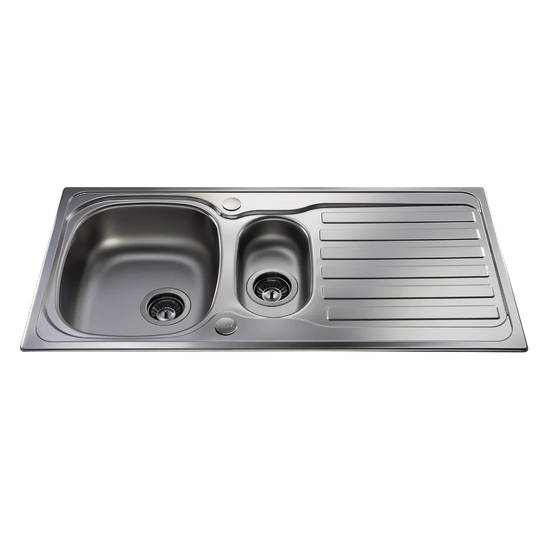
The sink is one of the hardest working parts of any kitchen. It is used for washing up, preparing food, filling pans and cleaning up after every meal. Because it is used so often, choosing the right sink and tap makes a real difference to how your kitchen works day to day. It also has a big effect on the look of the room, so it is worth getting right whether you are planning a full refit or a simple update.
Pick the right material
Kitchen sinks come in several materials, each with its own look and care needs.
- Stainless steel is the most common choice. It is durable, hygienic and suits most kitchen styles. It can show water marks and fine scratches over time, but these tend to blend in with regular use.
- Ceramic sinks have a classic look and a smooth, glossy surface that is easy to wipe clean. They are heavy, so the cabinet underneath needs to be strong enough to support them.
- Composite sinks are made from crushed stone or quartz mixed with resin. They come in a range of colours, from black to grey and white, and they feel solid and quiet in use.
Think about how you use your kitchen. If you often work with heavy pans, a tough material is a good choice. If style is your priority, a coloured composite or a ceramic farmhouse sink can become a focal point.
Choose the bowl layout
The number and size of bowls should match the way you cook and wash up.
- Single bowl. Simple and space saving. A large single bowl is handy for big roasting tins and baking trays.
- One and a half bowl. A main bowl plus a smaller one, which is useful for rinsing vegetables or draining pasta while the main bowl is in use. A model like this 1.5 bowl inset sink with taps is a popular all-round option.
- Double bowl. Two full-size bowls suit busy households and people who prefer to wash and rinse separately, but they need a wider base unit.
Also think about whether you want a drainer. If you have a dishwasher, you may prefer a smaller drainer or none at all to free up worktop space.
Inset, undermount or farmhouse?
How the sink is fitted affects both the look and the practical side.
- Inset sinks sit on top of the worktop with a rim around the edge. They work with almost any worktop and are usually the easiest to fit or replace.
- Undermount sinks are fitted below the worktop, giving a clean, seamless edge that makes it easy to wipe crumbs straight into the bowl. They need a solid worktop material such as stone or quartz.
- Farmhouse or apron sinks have an exposed front and suit traditional and country-style kitchens. They usually need a dedicated base unit.
Choosing a tap
The tap is used even more than the sink itself, so choose one that is comfortable and practical.
- Mixer taps with a single lever are easy to use with one hand, even when your hands are busy.
- Pull-out or pull-down taps have a hose that helps when rinsing the sink or filling large pans.
- Swan neck or high spout taps leave more room under the spout for big pots.
- Finish. Chrome is classic and easy to match, while brushed steel, black and brass finishes suit modern looks.
Check that your tap matches the number of tap holes in the sink, and look at your water pressure, as some taps are designed for higher pressure systems.
Before you buy
- Measure the base unit the sink will sit in.
- Check the size of the cut-out if you are keeping your current worktop.
- Make sure the bowl is deep enough for your largest pans.
- Think about where the waste and plumbing will go.
Taking a little time to plan helps you choose a sink and tap that look good and stand up to everyday use. You can compare more styles in our kitchen sinks range.